To be honest, I never used to give much thought to the subject of “chairs.”
In my mind, an office chair was merely a basic tool: as long as you could sit on it, it did its job; whether it was comfortable or not wasn’t the point. I believed that what truly influenced work efficiency was the task itself—not the chair you sat in.
But gradually, things began to change.
It started with just the occasional lower back ache or shoulder tightness; I assumed it was simply due to working for too long or maintaining poor posture. However, as time went on, this discomfort became increasingly frequent. Mornings were fine, but by the afternoon, I would noticeably start to fatigue. I felt a constant, persistent pressure on my lower back, and my shoulders and neck would begin to stiffen—to the point where I would unconsciously lean forward just to find some relief.
The problem was, these adjustments offered only momentary relief; I would quickly revert to my original state of discomfort. It wasn’t until that moment that I began to realize: perhaps the issue wasn’t merely “sitting for too long,” but rather that “the very act of sitting was fundamentally wrong.”
From Indifference to Careful Selection: I Began Researching Ergonomic Chairs
Initially, I actually harbored a certain prejudice against ergonomic chairs.
I always felt they looked too “corporate”—too clinical and utilitarian—as if they were designed solely for the office environment rather than for individual comfort.
But physical discomfort doesn’t lie. As my symptoms persisted, I finally began—for the very first time—to seriously research office chairs. It was during this process that I first encountered Herman Miller.
I began my systematic exploration of their products via the Herman Miller Hong Kong website. Contrary to my initial impressions, they weren’t simply selling chairs; rather, they emphasized providing a long-term solution for proper sitting posture.
After spending some time comparing options, I ultimately chose the Embody Chair with the White Frame. What drew me in wasn’t its aesthetic appeal, but rather the logic behind its structure—a design philosophy centered on “dynamic support,” rather than the static, fixed configuration of a traditional seat cushion and backrest.
The Initial Experience: Not “Softer,” but “Relearning How to Sit”
On the very first day my Embody Chair arrived, I didn’t immediately feel a sense of “extreme comfort.”
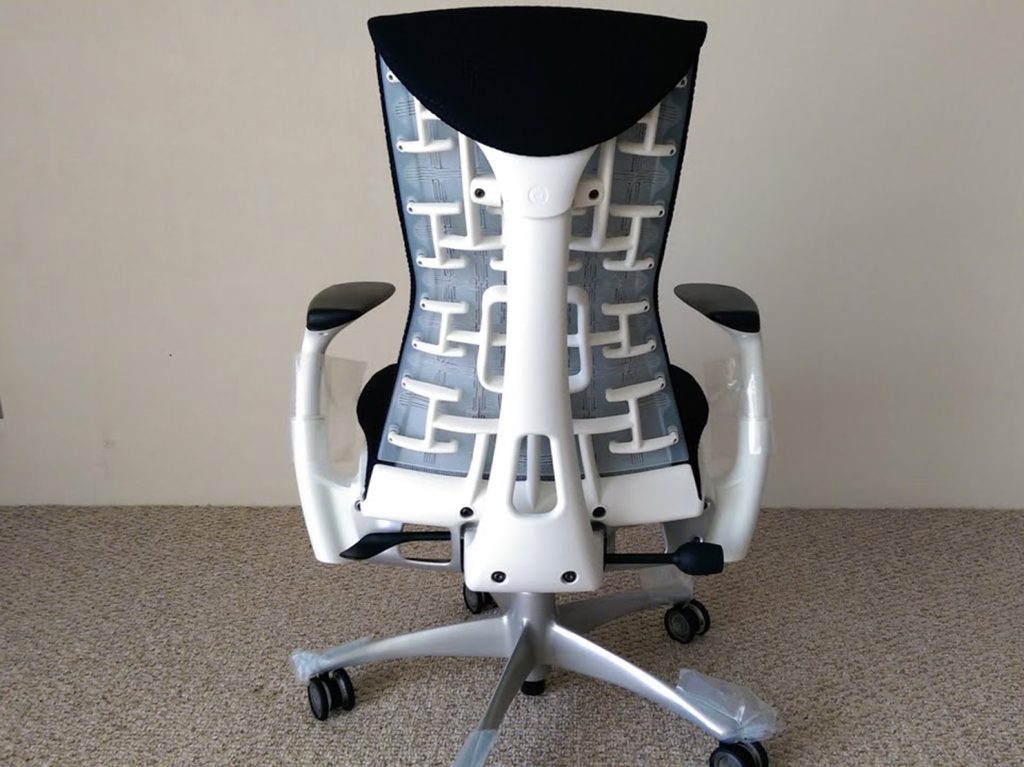
On the contrary, it felt completely different from any chair I had ever sat in before. It didn’t offer that soft, sinking sensation that lets you “melt” into the seat; instead, it provided a distinct, palpable sense of support—as if my body were being gently guided back into a more natural, aligned position. For the first few days, I actually felt a bit unaccustomed to it; the “sit however you please” attitude I used to have simply didn’t apply to this Herman Miller chair anymore. However, after about a week, I began to notice a distinct shift: my body stopped constantly shifting positions, I felt a greater sense of stability while seated, and the fatigue in my lower back was significantly alleviated.
It doesn’t transform the experience instantly; rather, it gradually guides the body back into a more stable state.
The Most Apparent Change: Reduced Strain on the Lower Back, Shoulders, and Neck
Looking back, the most noticeable improvement was undoubtedly in my lower back. The fatigue I used to experience wasn’t exactly pain, but rather a cumulative exhaustion—the longer I sat, the more pronounced it became, and it was incredibly difficult to make it disappear completely, even with rest.
However, after using the Herman Miller Embody Chair (White Frame edition) for a while, that sensation has diminished significantly. More importantly, I’ve realized that I no longer find myself constantly “readjusting my sitting posture.” Previously, I would unconsciously lean forward, lean back, or shift positions; now, my body maintains stability much more easily, eliminating the need to constantly compensate for physical discomfort.
The changes in my shoulders and neck have been equally striking. In the past, after working for a while, I would fall into habits like slightly shrugging my shoulders or jutting my head forward; now, thanks to the more natural back support, the tension in my shoulders and neck has been noticeably reduced.
This transformation isn’t dramatic, but it is remarkably consistent.
The White Frame Offers More Than Just Functionality—It Transforms the Sense of Space
My initial decision to choose the Herman Miller White Frame was partly driven by aesthetics, but I later discovered that it also has a tangible impact on my overall work environment.
The white structural frame feels visually lighter than that of traditional dark-colored office chairs; it doesn’t visually “weigh down” or crowd the space. This is particularly effective in environments with a minimalist desktop setup, where it helps the entire workspace feel cleaner and more open.
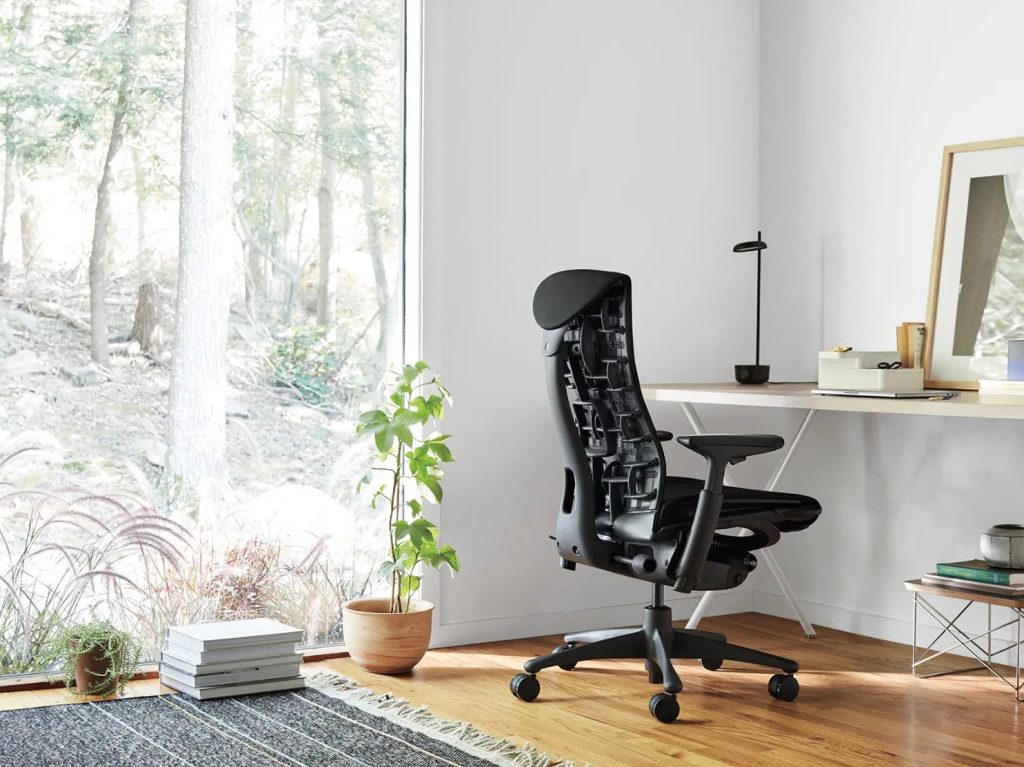
I didn’t pay much attention to this aspect at first, but I eventually realized that it indirectly influences my psychological state.
Once the environment ceased to feel visually oppressive, my ability to focus while working became more consistent; I no longer felt that heavy, claustrophobic sensation of being “boxed in” by my office surroundings.
A New Understanding of the “Office Chair”: It Ultimately Shapes Your State of Work
Since I started using this Herman Miller chair, I’ve gradually come to understand the truth behind a statement I once considered a bit of an exaggeration: an office chair is, fundamentally, a productivity tool.
My current appreciation for this concept isn’t simply because the chair is “more comfortable,” but rather because it minimizes physical distractions.
When your lower back is no longer plagued by constant fatigue, and your shoulders and neck are free from tension, your attention remains uninterrupted—allowing you to stay fully focused on your work. You can sustain a stable state of productivity for longer periods, rather than constantly toggling between “adjusting your posture” and “focusing on work.”
This impact is cumulative, not instantaneous.
Comfort Is, In Fact, an Integral Part of Long-Term Efficiency
Looking back now, my understanding of the Herman Miller Embody Chair (White Frame) has shifted completely.
It is not merely a “comfortable chair to sit in,” but rather a tool that restores the body to a more optimal state—a state that, in reality, serves as the very foundation for sustainable long-term work.
It is precisely for this reason that I am now more inclined to choose brands like Herman Miller Hong Kong, which specialize in ergonomic design. For what truly drives efficiency is never fleeting comfort, but rather the body’s ability to maintain stability and composure, day after day, the moment you sit down to work.