A TV is no longer just a “big screen” in the living room — it has become the core hub for home entertainment, gaming, and smart connectivity. Especially in 2025, TV technology has seen a new leap: Mini LED and QD-OLED are now mainstream, 144Hz high refresh rate is common, systems are smarter, and interfaces are more versatile — yet the prices don’t necessarily skyrocket. With options ranging from a few hundred dollars to well over ten thousand, how do you pick the right one and avoid post-purchase regret?
Let’s break down the five key elements of TV selection: Screen Size, Panel Type, Picture Quality, System Ecosystem, and Connectivity, helping you avoid costly mistakes like buying a TV that’s too large to fit your space, or too expensive for features you’ll never use. I’ll also recommend several top-performing 2025 models to guide you toward your ideal choice.
1. How to Choose the Right TV Size: Don’t Blindly Go Bigger
Common Misconception: The Bigger, the Better?
Many people assume that the larger the TV, the better the viewing experience. However, a screen that’s too big in a small room can lead to eye strain and blurry images, while a screen that’s too small can make it hard to read subtitles from a distance.
Correct Logic: Use Viewing Distance to Determine Size
The optimal TV size is closely tied to your viewing distance. With 4K resolution now the standard, here’s a practical guide:
| Viewing Distance (meters) | Recommended Size (inches) |
| Under 1.5 meters | 43–50 inches |
| 1.5–2 meters | 50–65 inches |
| 2–2.5 meters | 65–75 inches |
| Over 2.5 meters | 75–85+ inches |
If you have a spacious room and want immersive visuals, large sizes are definitely worthwhile. But for smaller spaces like bedrooms or study rooms, a 55–65-inch TV offers the best balance between viewing comfort and visual immersion.
2. Panel Types Explained: It’s More Than Just IPS vs. VA
The panel is the heart of a TV. In 2025, panel technology has evolved significantly. Here are the main types you’ll encounter:
1. LED/LCD: Budget-Friendly Basics
- IPS Panels: More accurate color reproduction and wider viewing angles.
- VA Panels: Higher contrast and deeper blacks, great for movie watching.
Best for: Budget-conscious users and everyday home use.
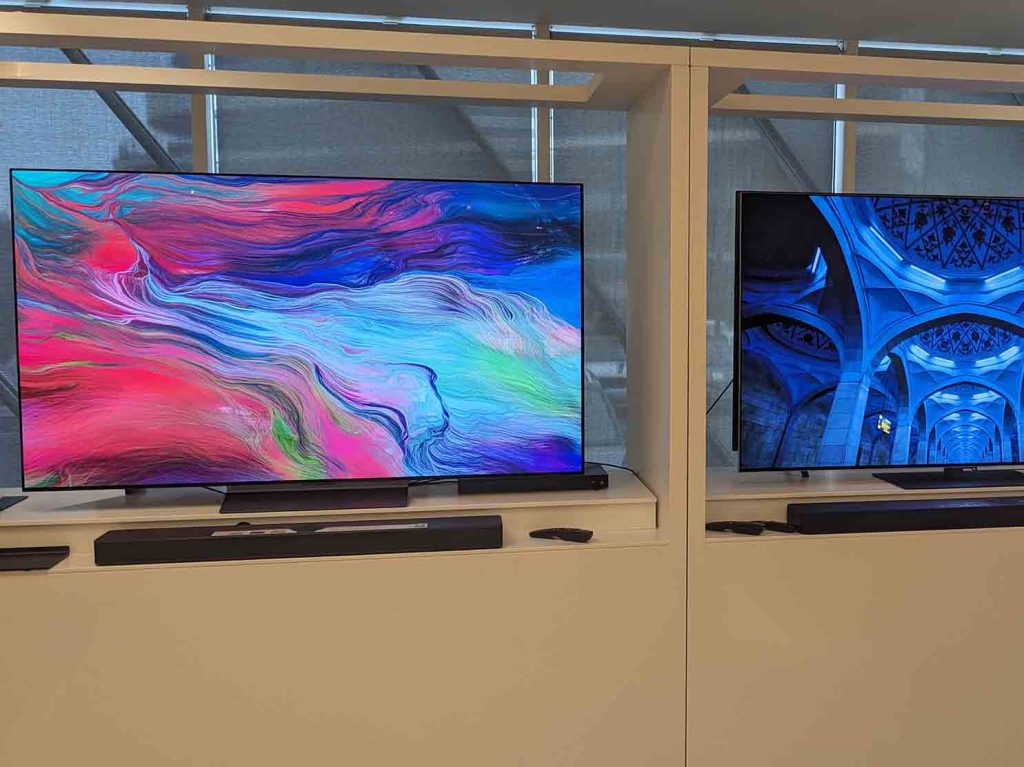
2. Mini LED: Bright, High Contrast at a Reasonable Price
- Uses micro-LED backlighting for higher brightness and better local dimming.
- Offers near-OLED contrast without the risk of screen burn-in.
Recommended Models: TCL QM8 (2025), Samsung QN90D, Hisense E8K Pro.
Best for: Users who want excellent picture quality without OLED concerns.
3. OLED / QD-OLED: The Pinnacle of Picture Quality
- Self-emissive pixels for perfect blacks and unmatched contrast.
- QD-OLED adds quantum dot tech for higher brightness and wider color gamut.
Recommended Models: LG OLED G4, Samsung S95D, Sony A95L (2025 version).
Best for: Picture quality purists, cinephiles, and nighttime viewers.
4. High Refresh Rate Panels (120Hz/144Hz): A Must for Gamers
- Smoother motion for action scenes and gaming.
- Many mid-to-high-end 2025 TVs now support HDMI 2.1 and 4K@120Hz.
Recommended Models: Sony X95L, Samsung QN90D, Hisense U8K, TCL QM851G.
3. Choosing the Right System: Android, Tizen, WebOS — Pros and Cons
Your TV’s operating system isn’t just a menu — it affects app availability, voice control, casting, responsiveness, and even startup time.
1. Google TV (Android-based)
- Pros: Most app options, Chromecast support, Google Assistant voice control.
- Cons: Some brands have poor optimization, occasional lag.
Brands: TCL, Hisense, Xiaomi, Sony’s mid-range models.
2. Apple TV System (Requires Apple TV Device)
- Not built-in, but an excellent option if you already own an Apple TV device.
- Perfect for iPhone/iPad users due to seamless ecosystem integration.
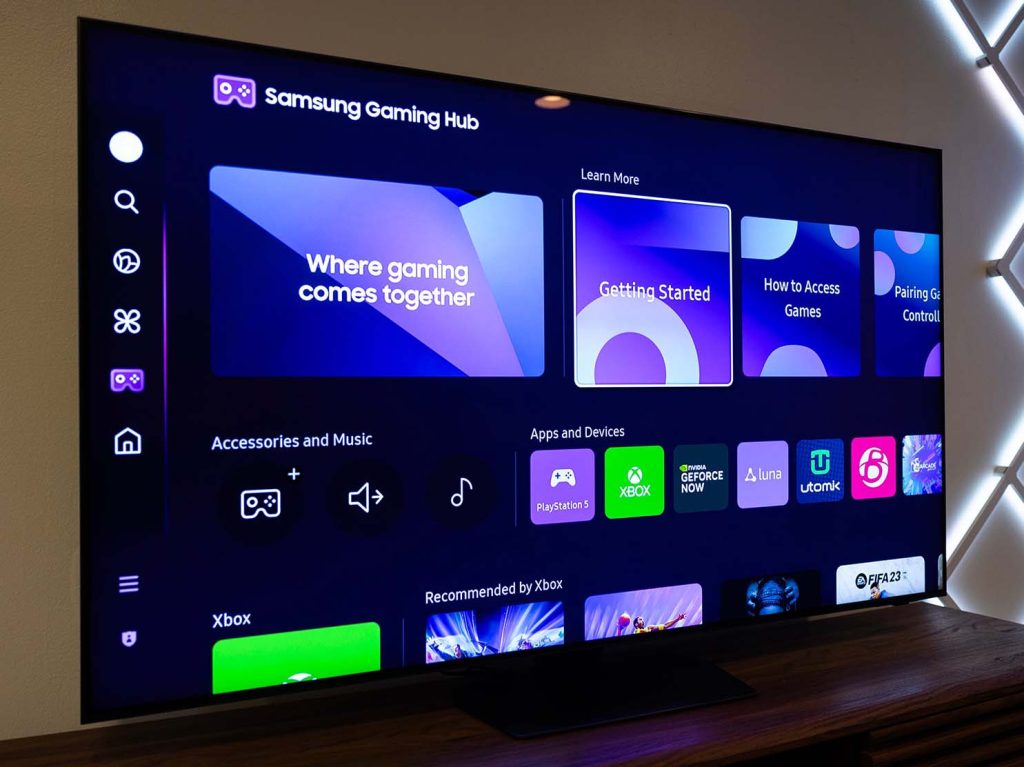
3. Tizen OS (Samsung)
- Pros: Ultra-smooth, fast startup, elegant interface, Smart Hub is content-rich.
- Cons: Limited app installation outside Samsung’s app store.
Models: Samsung S95D, QN85D, and other 2025 models.
4. WebOS (LG)
- Pros: Intuitive, quick response, card-style interface is user-friendly.
- Cons: Fewer apps than Android, but essentials are covered.
Best for: Kids, seniors, and users who prefer simplicity.
4. Does Sound Quality Matter? Absolutely Yes
Many buyers focus only on visuals and overlook audio, but sound quality significantly affects immersion — from clear dialogue to impactful bass.
1. 2.1/2.2 Channels Are the Minimum
- Most entry-level TVs only have stereo speakers, which sound flat and lack bass.
2. Dolby Atmos or DTS:X Support Makes a Big Difference
- These formats simulate surround sound using virtual channels.
- Greatly enhanced with a soundbar, such as the Sonos Beam or Bose Soundbar.
3. Audio-Video Sync Is Crucial
- In 2025, premium TVs feature Bluetooth 5.2 and HDMI eARC for lower latency and better sync between sound and picture.
5. Interface & Ports: HDMI 2.1 and USB-C Are Game Changers
Your TV’s connectivity determines what external devices it can handle — like consoles, sound systems, laptops, or storage drives.
| Port Type | Function |
| HDMI 2.1 | Enables 4K@120Hz for smooth gaming |
| HDMI eARC | High-bandwidth audio to connect advanced soundbars or AV receivers |
| USB 3.0 | External video playback, peripherals, hard drives |
| Optical Out | For connecting older audio systems |
| RJ45 Ethernet | Stable, wired internet connection |
6. Top 2025 TV Recommendations
1. LG OLED G4 (77″)
- QD-OLED panel with peak brightness over 1500 nits and 4K@144Hz support
- α11 AI chip for intelligent picture processing
- WebOS system is intuitive and responsive
2. Samsung QN90D (65″)
- Mini LED with precise local dimming and excellent brightness
- Tizen OS + Q-Symphony for synchronized audio-visual experience
- Supports Dolby Vision, HDR10+, and FreeSync for smooth gaming
3. Sony Bravia XR A95L (65″)
- Top-tier QD-OLED for unrivaled color and contrast
- Google TV system with superior AI recommendations and voice control
- HDMI 2.1 support makes it a perfect PS5 companion
4. Hisense E8K Pro (75″)
- China’s pride in Mini LED with 2000+ dimming zones
- Dolby Atmos and 120Hz refresh rate
- Android-based system offers wide app support and great value
7. Four Essential Questions Before Buying a TV
- What is your viewing distance?
→ Determines the maximum screen size you can comfortably handle. - What kind of content do you watch most?
→ Love movies? Go OLED. Hardcore gamer? Look for HDMI 2.1. Just casual viewing? Mini LED will do just fine. - Do you own other smart devices?
→ Apple users will benefit most from Apple TV. Samsung owners should go for Q-Symphony compatible models. - What’s your budget?
→ Under $800? Look for domestic Mini LED models. Over $1500? Go straight for OLED flagships — you won’t regret it.
8. Don’t Get Lost in the Specs — Focus on Real Use Scenarios
TVs today are like smartphones: same size, vastly different specs, but it all comes down to experience. The TV that won’t disappoint is the one that best fits your everyday routine, feels intuitive to use, and is loved by everyone at home.
You don’t need the most expensive flagship, nor should you blindly chase high-end features. Define your needs, space, and budget clearly. Whether it’s a high-end OLED, value-packed Mini LED, or a compact screen for smaller rooms — 2025 has something great for every living room.
Purchase Tip: All mentioned TV models are available on Amazon, with official shipping, global delivery, and guaranteed authenticity for a worry-free shopping experience.