When I first saw Brick on social media, I was a little skeptical. Could such a small device really help people break the habit of unconsciously scrolling through their phones? I’d tried countless apps and system restrictions, and almost without exception, I’d bypassed them myself. Could a little brick really change my behavior?
Driven by curiosity, I bought a Brick and began to pay attention to the phenomenon behind it. I quickly discovered that it wasn’t just a “phone-free tool,” but was sparking a global attention revolution. Brick‘s sales surpassed tens of thousands of units in just a few months, with over 25,000 five-star reviews. International influencers were sharing their experiences, which, in my view, wasn’t just a product’s popularity, but reflected a deep-seated social need—digital minimalism.
The Era of “Harvesting” in the Attention Economy
If you think back carefully, you’ll find that modern life is almost entirely surrounded by algorithms. Short videos, social media, news feeds… every app is using various psychological techniques to compete for your attention. Our time, attention, and emotions have almost become commodities on digital platforms.
I’m no exception. I used to spend more than five hours a day on my phone, leading to anxiety, procrastination, and insomnia. Even knowing this state was bad, I was always led by the algorithms. Like Gabby once said, the first thing she did every day was check the news, watching her precious time being wasted, and she was powerless to stop it.
I began to understand that this wasn’t just a matter of personal self-discipline, but a systemic phenomenon. We are no longer actively using tools, but rather being “harvested” by them.
Digital Minimalism: From “More” to “Less,” From “Connection” to “Disconnection”
Brick‘s popularity reflects how the concept of “digital minimalism” is becoming a new necessity for modern people. Digital minimalism isn’t about completely isolating oneself from the digital world, but about actively choosing what’s worth connecting to and what needs to be disconnected.
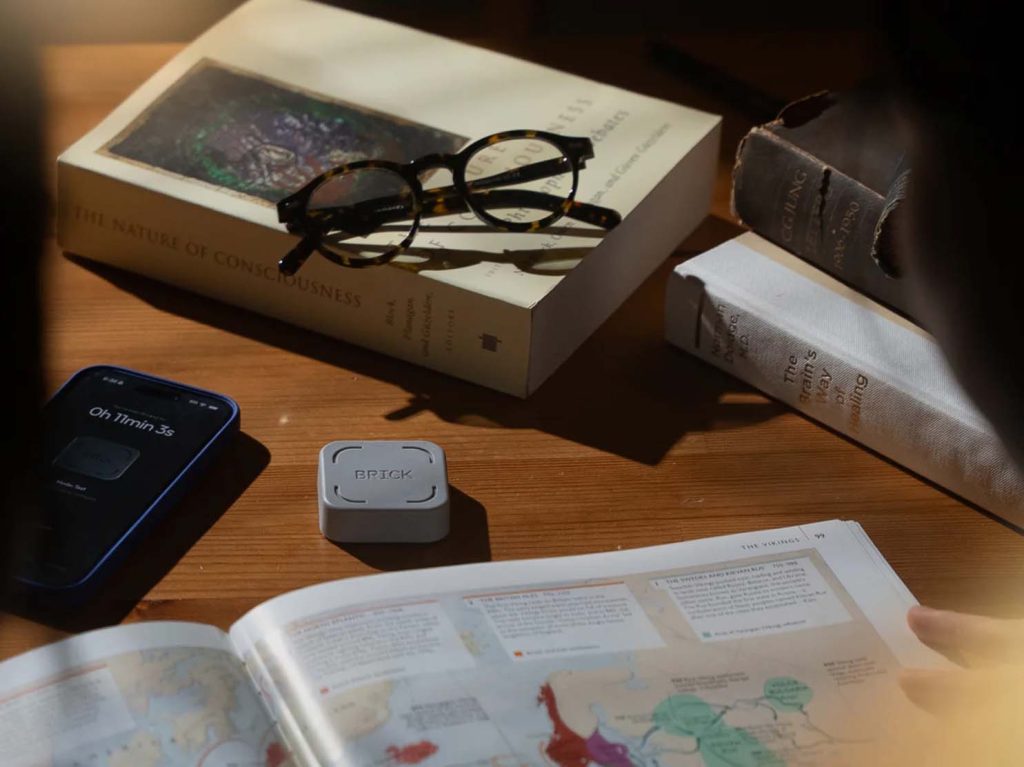
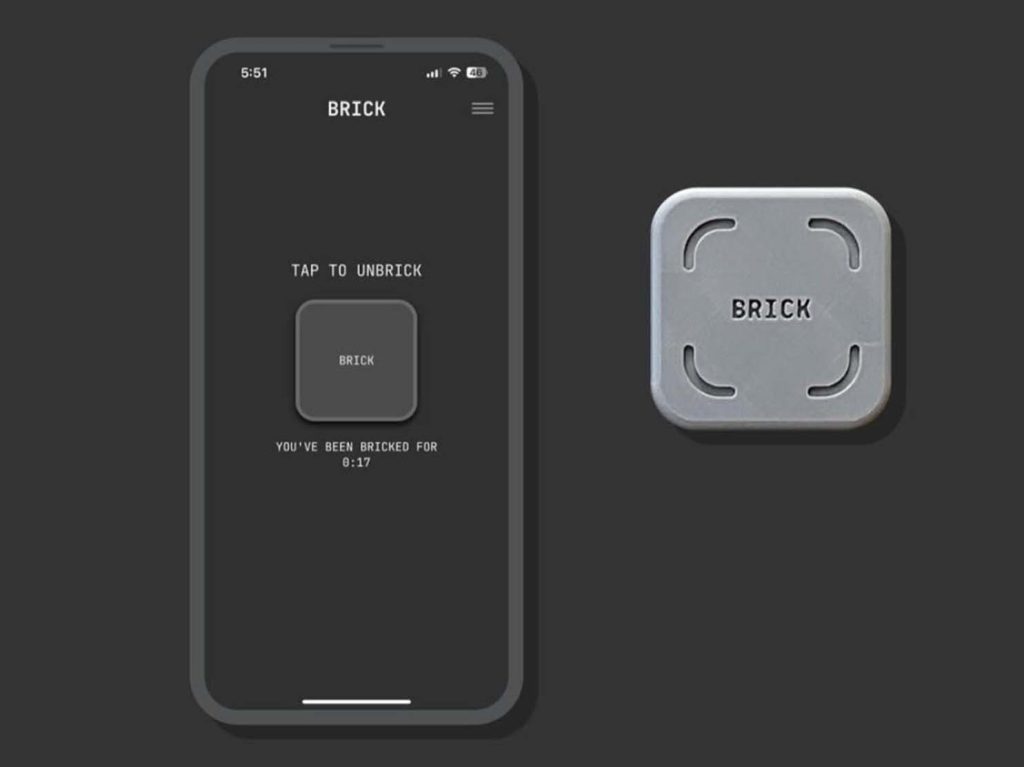
In using Brick, I deeply experienced the power of this minimalism. Every day, I have to grab Brick and tap the NFC key to unlock my phone. Those few seconds of pause made me ask myself again: Do I really need to swipe now? Many behaviors are just habitual reactions, not conscious choices.
My friend Guy echoed this sentiment. Everyone in his family is addicted to their phones, especially at night. He said, “Brick made me realize that the digital world doesn’t have to be completely connected; some connections can be paused.” This conscious “disconnection” made both of us rediscover the weight of time.
Hardware Return: The Ultimate Value of Physical Constraints
I repeatedly tried using software to wean myself off my phone, but almost every attempt failed. System restrictions were easy to bypass, blocked apps could be uninstalled, and reminders were always ignored… all the resistance was too weak.
Brick‘s core logic is simple yet incredibly powerful: physical friction + deliberate separation. To remove the restriction, you must touch the physical device. This action is not just a technical means, but also a psychological resistance, giving you a chance to pause and reflect on your actions.
In the third week of using it, I began to notice a real change in my life. My phone no longer automatically controls my behavior; it becomes an auxiliary tool. Daily screen time has decreased by more than 3 hours, resulting in significantly improved focus, better sleep, and a marked reduction in anxiety. This change is the profound significance of physical constraints.
We are not anti-technology, but anti-technology-controlled
Seeing Brick‘s global success, I often think: we don’t need to distance ourselves from technology, but rather to master it. Phones, social media, and various apps are essentially tools, not masters.
I once heard my friend Griffin say that he used to set various app restrictions on his phone, but he would always just click “ignore.” Brick, however, made him truly stop, realizing when he was passively scrolling and when he was actively using the app.
This is a shift in mindset: from “passively accepting distractions” to “actively choosing how to use it.” And this shift is far more profound than simple screen time statistics or app restrictions.
Future Trends: More Physically Isolated Products Will Emerge
Observing the overall trend, I increasingly feel that Brick‘s popularity is just the beginning. More similar products will emerge in the future, helping people regain control of their attention. Whether focusing on work or study, spending time with family, or improving sleep, physical isolation and deliberate separation will become new necessities.
I’ve been reflecting on this myself: if everyone recognized the scarcity of attention and learned to proactively disconnect, our life rhythm, work efficiency, and even mental health would undergo a qualitative change. Brick transforms this thinking from theory into reality, making “digital minimalism” not just a concept, but an actionable lifestyle.
Regain control of your attention, starting with Brick
In the past, my life was often driven by my phone; I unconsciously scrolled through screens every day, experiencing anxiety and procrastination. Through Brick, I discovered that change isn’t about willpower, but about environmental design and physical constraints. In just 30 days, I regained control of my time and attention, and rediscovered my life’s rhythm.
Brick‘s success demonstrates that digital minimalism is becoming a new necessity. And I believe this is not just a product craze, but an awakening of a lifestyle—learning to choose between connection and disconnection is the only way to truly control your time, attention, and life.